Smart Apartments vs Traditional Residential Units: Which Is Better for Modern Living?
Introduction
The real estate market is evolving rapidly, and homebuyers today have more choices than ever before. One of the biggest changes in residential development is the rise of smart apartments, which are transforming how people live, work, and manage their homes.
While traditional residential units have served families for decades, modern buyers are increasingly attracted to apartments equipped with smart technologies, enhanced security systems, and modern conveniences.
But what exactly is the difference between a smart apartment and a traditional residential unit? More importantly, which option is better for today’s homeowners and investors?
What Is a Smart Apartment?
A smart apartment is a residential unit that uses modern technology and automation systems to improve comfort, convenience, security, and energy efficiency.
Smart apartments may include:
- Smart door locks
- Video intercom systems
- Mobile-controlled lighting
- Smart security monitoring
- Energy-efficient systems
- High-speed internet infrastructure
- Automated access control
These features allow residents to manage various aspects of their homes through smartphones or centralized systems.
What Is a Traditional Residential Unit?
A traditional residential unit refers to a conventional apartment or house that operates without integrated smart technologies.
These properties typically rely on:
- Manual locks
- Traditional switches
- Standard security arrangements
- Conventional utility management
While traditional units continue to provide comfortable living spaces, they often lack the automation and connectivity that many modern buyers now seek.
Why Smart Apartments Are Gaining Popularity
The demand for smart apartments is growing worldwide, and Karachi is no exception.
Several factors are driving this trend:
Increased Security Requirements
Modern residents place a high value on security.
Smart apartments often offer:
✔ CCTV integration
✔ Smart access systems
✔ Visitor management controls
✔ Digital monitoring solutions
These features provide enhanced protection and peace of mind.
Greater Convenience
One of the biggest advantages of smart apartments is convenience.
Residents can often control:
- Lighting
- Access systems
- Security features
- Building services
through mobile applications or automated systems.
This level of convenience appeals particularly to busy professionals and young families.
Energy Efficiency
Energy costs continue to rise, making efficiency increasingly important.
Many smart apartments include:
- Energy-saving lighting
- Efficient electrical systems
- Smart power management
These technologies can help reduce energy consumption and improve sustainability.
Traditional Residential Units Still Have Their Advantages
Despite the popularity of smart apartments, traditional residential units continue to attract buyers.
Simplicity
Many homeowners appreciate systems that are straightforward and easy to operate without relying on technology.
Lower Initial Costs
Traditional units may have lower development costs, which can sometimes translate into lower purchase prices.
Familiarity
Some buyers simply prefer conventional living arrangements that do not require learning new technologies.
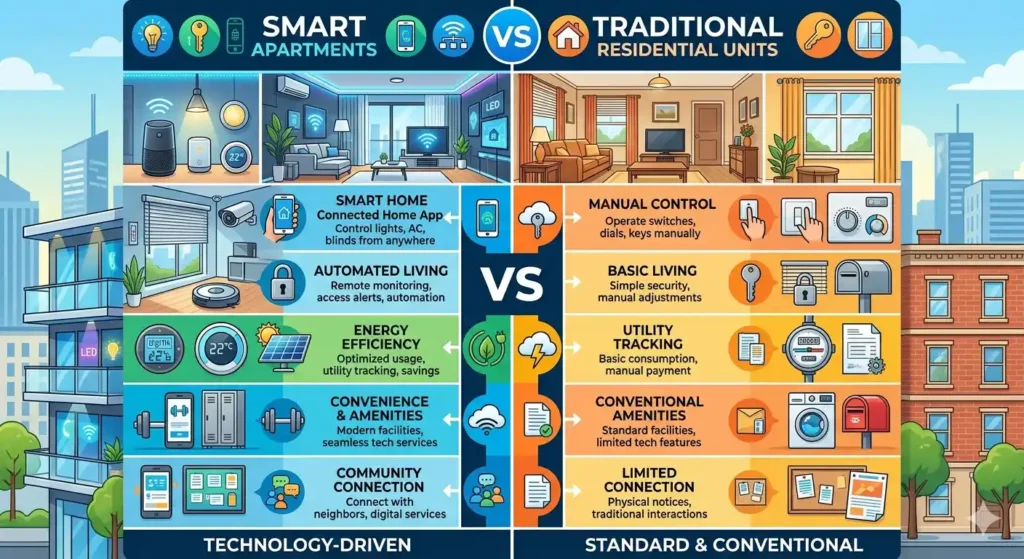
Smart Apartments vs Traditional Residential Units
| Feature | Smart Apartments | Traditional Residential Units |
|---|---|---|
| Security | Advanced digital security | Conventional security systems |
| Access Control | Smart entry systems | Manual locks and keys |
| Energy Efficiency | High | Standard |
| Convenience | Automated controls | Manual operations |
| Technology Integration | Extensive | Limited |
| Maintenance Monitoring | Often automated | Manual reporting |
| Internet Infrastructure | Modern and optimized | Standard setup |
| Property Appeal | Strong among younger buyers | Traditional buyer preference |
| Future Readiness | High | Moderate |
| Investment Potential | Growing demand | Stable demand |
Why Young Buyers Prefer Smart Apartments
Modern homebuyers are increasingly technology-oriented.
Young professionals and first-time buyers often prioritize:
- Smart security
- Reliable connectivity
- Energy efficiency
- Modern design
- Lifestyle convenience
As a result, smart apartments are becoming highly attractive to younger generations entering the property market.
Smart Apartments and Property Investment
Smart apartments are not only designed for comfortable living—they can also offer investment advantages.
Potential benefits include:
📈 Strong resale appeal
🏢 Higher tenant interest
🔑 Future-ready infrastructure
💰 Enhanced market competitiveness
As technology continues to influence real estate, smart-enabled properties may enjoy stronger demand in the years ahead.
The Growing Demand for Smart Living in Karachi
Karachi’s residential market is evolving alongside global housing trends.
Homebuyers are increasingly looking for:
✔ Modern facilities
✔ Secure communities
✔ Digital convenience
✔ Energy-efficient environments
✔ Long-term investment value
Developers are responding by incorporating smart features into new apartment projects to meet changing consumer expectations.
Al Rauf Group's Contribution to Modern Apartment Living
Al Rauf Group focuses on structured apartment developments designed for modern urban living and long-term investment.
Al-Rauf Smart City
Ideal for modern apartment living with flexible installment plans.
Visit: Al-Rauf Smart City
Al-Rauf North Vista I & II
Popular for family apartments and installment-based ownership.
Visit: Al-Rauf North Vista I & II
Al-Rauf Gold Raas
Affordable residential investment opportunities.
Visit: Al-Rauf Gold Raas
Al Rauf Gold Residency
Family-oriented apartment project with modern amenities.
Visit: Al Rauf Gold Residency
China Town Residency
Modern apartment living for urban buyers.
Visit: China Town Residency
Which Option Is Better?
The answer depends on your priorities.
A smart apartment may be ideal if you value:
- Technology integration
- Enhanced security
- Convenience
- Energy efficiency
- Future-ready living
A traditional residential unit may suit buyers who prefer:
- Simplicity
- Conventional systems
- Familiar living environments
Both options have their advantages, but the market trend clearly shows growing interest in smart, connected living spaces.
Final Thoughts
The future of residential living is increasingly centered around convenience, security, and technology.
While traditional residential units continue to serve many homeowners well, smart apartments are rapidly becoming the preferred choice for modern buyers seeking efficient and connected lifestyles.
As Karachi continues to develop, smart residential communities are expected to play an increasingly important role in shaping the city’s housing landscape.
For homebuyers and investors alike, understanding these differences can help make smarter real estate decisions for the future.
Frequently Asked Questions
1. What is a smart apartment?
A smart apartment uses technology and automation systems to improve convenience, security, and energy efficiency.
2. Are smart apartments more secure than traditional units?
Yes, many smart apartments include advanced security features such as digital access controls, CCTV integration, and visitor management systems.
3. Do smart apartments save energy?
Many smart apartments incorporate energy-efficient technologies that help reduce electricity consumption.
4. Are smart apartments a good investment?
Smart apartments often attract strong buyer and tenant demand because of their modern features and future-ready infrastructure.
5. What is the main difference between smart apartments and traditional units?
The primary difference is the integration of technology, automation, and digital management systems in smart apartments.