
New Property vs Resale Property: Which Is Better to Buy?
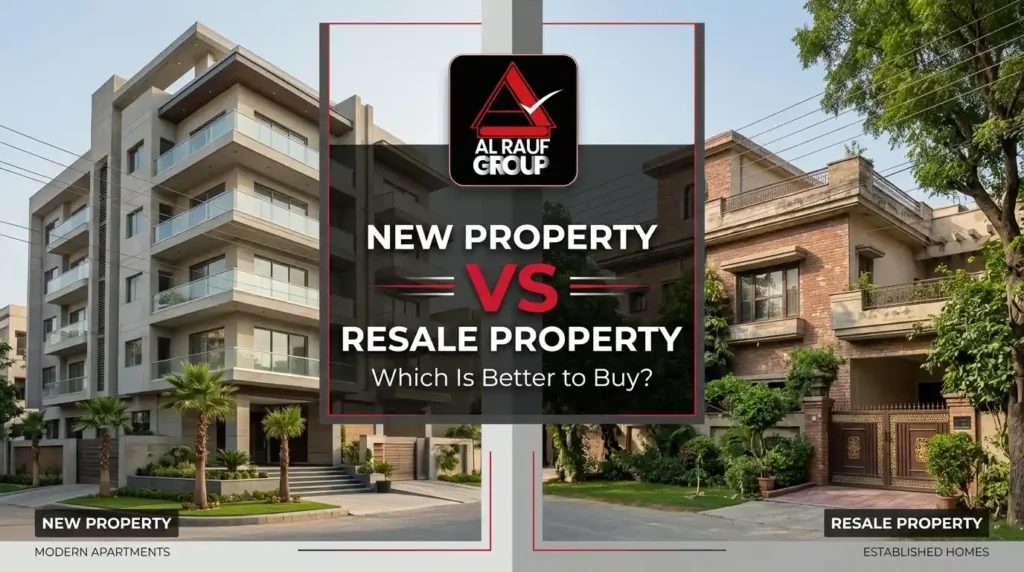
New Property vs Resale Property: Which Is Better to Buy in Pakistan?
Brand-new project or an existing home you can walk through today? Here's an honest comparison of costs, risks and real-life trade-offs, so you can choose with confidence.
Is It Better to Buy a New Property or a Resale Property?
The 30-second summary
- New property: modern design, possible payment plans, choice of units. Watch for delays and developer risk.
- Resale property: see it first, established area, room to negotiate. Watch for title issues, repairs and unpaid dues.
- Either way: verify ownership and approvals before you pay anything.
What Is the Difference Between a New Property and a Resale Property?
A new property can be an apartment, house, commercial unit or plot in a recently launched project. Depending on the stage, it may be under construction, just completed or ready for possession.
A resale property already has an owner, and perhaps a history of occupants. You deal with that owner, not the original developer.
What Are the Pros and Cons of Buying a New Property?
Modern design and features
Newer layouts, lifts, parking, security and shared amenities can make daily life easier.
Flexible payment plans
Some developers let you pay in instalments instead of arranging everything at once. Always review the schedule and extra charges.
Choice of units
Depending on availability, you may pick the floor, size or layout. Confirm anything you choose in writing.
Growth potential
A developing area may benefit from new roads, transport and facilities. Growth is never guaranteed.
What are the disadvantages of a new property?
- Possession delays: under-construction projects can take longer than promised.
- Development uncertainty: promised facilities may not be ready on time.
- Extra costs: development charges, utility connections and documentation may apply.
- Limited inspection: you can't fully inspect an unfinished unit.
- Developer risk: delivery depends on the developer's finances, experience and approvals.
What Are the Pros and Cons of Buying a Resale Property?
Inspect before you buy
Check room sizes, light, ventilation, build quality and surroundings in person.
Established surroundings
Roads, shops, schools and healthcare may already exist, so you judge the area as it is, not as planned.
Room to negotiate
Depending on the seller's situation, price, payment terms or possession date may be negotiable.
Possibly faster possession
If it's vacant and the documents are clear, you may move in sooner. Confirm terms before paying.
What are the disadvantages of a resale property?
- Maintenance: older properties may need repairs or renovation.
- Ownership history: you must verify the seller's legal authority to transfer.
- Outstanding payments: unpaid bills, taxes or society dues may need clearing.
- Fixed layout: changes cost extra.
- Occupancy: tenants or others may be living there, so agree possession clearly.
New Property vs Resale Property: What Are the Key Differences?
| Factor | New Property | Resale Property |
|---|---|---|
| Seller | Usually a developer or builder | Current owner or authorised seller |
| Condition | Under construction or newly completed | Existing, inspectable |
| Payment | May offer developer instalment plans | Usually negotiated with the seller |
| Possession | Depends on completion and agreement | Depends on occupancy and transfer |
| Design | Modern layouts and specifications | Existing layout; renovation may be needed |
| Location | Developing or established | Often an established neighbourhood |
| Maintenance | Depends on build quality and handover | Depends on age and past upkeep |
| Main risk | Developer performance and delays | Title issues, condition and unpaid dues |
| Best for | Buyers comfortable with the project timeline | Buyers who prefer to see before buying |
The label matters less than the property's quality, location, legal status, price and fit for your needs.
Which Is More Affordable: New or Resale?
For a new property, add up the booking amount, instalments, final payment, development charges and utility connections. Also consider whether you'll pay rent while waiting for possession.
For a resale property, include the negotiated price, taxes, transfer and registration costs, society charges, legal verification and any renovation.
- Booking or down payment
- Scheduled instalments
- Development or possession charges
- Utility connection costs
- Taxes and transfer expenses
- Possible rent during construction
- Agreed purchase price
- Taxes and registration fees
- Society or authority transfer charges
- Outstanding dues, if payable by you
- Legal verification expenses
- Repair and renovation budget
Which Has Better Investment Potential?
With a new property, don't assume an early booking price will automatically rise. It depends on the developer's delivery record and how the area really develops. With a resale property, age, maintenance and repair costs can eat into returns.
What affects a property's value?
- Location: main roads, transport, schools, hospitals and commercial areas.
- Credibility: a clear ownership history or a reliable delivery record.
- Legal approvals: permissions, title documents and transfer requirements.
- Construction quality: materials, workmanship and maintenance.
- Market demand: buyer interest, rental demand and similar listings.
- Total cost: price, taxes, charges, repairs and ongoing expenses.
Chasing rental income? Compare realistic rents and likely vacancy. Aiming for long-term appreciation? Study the area's development prospects and the price you're paying today.
Which Option Fits You Best?
Choose a new property if…
- You prefer modern layouts and facilities.
- You can follow an instalment schedule.
- You don't need immediate possession.
- You've checked the developer and project approvals.
- You're comfortable with the delivery timeline.
Choose a resale property if…
- You want to inspect the property first.
- You prefer an established neighbourhood.
- You need possession in a shorter timeframe.
- You want to negotiate with the owner directly.
- You're ready to check documents and condition.
What Should You Check Before Buying Any Property in Pakistan?
Check the seller's identity, ownership documents and title history.
Confirm permissions with the relevant authority.
Visit the site or unit and check its real condition and location.
Ask for a written breakdown of taxes, fees and dues.
Understand payment dates, cancellation, possession and transfer terms.
Get the possession date and obligations in writing.
Verify utility bills, taxes, society dues, mortgages and liabilities.
Use the proper registration and transfer process for the jurisdiction.
What Are the Most Common Property Buying Mistakes?
Most problems start when buyers rush. Avoid these:
- Choosing a property only because the booking price looks affordable.
- Ignoring the developer's past projects and delivery history.
- Assuming an existing property has clear ownership documents.
- Not visiting the location or inspecting the property.
- Overlooking taxes, transfer charges, maintenance and repairs.
- Paying token money without a written agreement and receipt.
- Trusting verbal promises about possession, facilities or returns.
- Not checking the seller's legal authority to sell.
Final Thoughts: Choose the Property That Fits Your Life
This isn't really about new versus old. It's about finding a property that fits your finances, lifestyle, investment plans and possession needs.
A new property may suit you if you value modern features, a payment plan and a developing location. A resale property may suit you if you want to inspect the actual unit, understand the neighbourhood and move in sooner.
Compare the total cost, verify every document, inspect in person and understand the agreement. A well-researched purchase beats a rushed one driven by a discount or a slick advertisement.
At Al Rauf Group, we believe informed decisions are the foundation of better property ownership. Take your time, and choose with confidence.
Keep Reading
More resources to help before your next real estate decision.
→ Read Our Complete Property Buying Guide → Explore More Property Insights → Visit Al Rauf GroupFrequently Asked Questions About New and Resale Properties
What is the main difference between a new property and a resale property?
A new property is generally bought from a developer or builder, while a resale property is bought from its current owner. New properties may be under construction or completed. Resale properties already have an ownership history.
Is buying a new property better than buying a resale property?
Neither is always better. New properties may offer modern features and instalment plans. Resale properties let you inspect the unit and neighbourhood first. Your budget, timeline and goals should decide.
Is a new property more expensive than a resale property?
Not necessarily. Price depends on location, size, quality, demand, project stage and market conditions. Compare the total cost, including taxes, transfer charges, development fees and possible renovation.
Can I buy a new property on instalments in Pakistan?
Some developers offer instalment plans. Schedules, extra charges, cancellation policies and possession terms vary by project, so review the written agreement before booking.
What should I check before buying a resale property?
Verify the seller's identity and ownership documents, inspect the condition, check outstanding taxes and utility bills, review society dues, look for any mortgage or dispute, and confirm the correct transfer process.
Are new properties a good investment?
They can be, if the project has proper approvals, a credible developer, a realistic price and genuine demand. Future appreciation isn't guaranteed, and delays can affect returns.
Can I earn rental income from a resale property?
Yes, if the location has tenant demand. Check comparable rents, property condition, maintenance costs and likely vacancy periods before investing.
Does a new property always come with a warranty?
No. Warranty coverage depends on the developer, property type and written agreement. Ask for the terms, covered defects, exclusions and claim procedure before buying.
Which is better if I need immediate possession?
A completed, vacant resale property may suit you, though a completed new unit can also be available right away. Confirm the actual possession status and transfer conditions either way.
How can I reduce the risks of buying property in Pakistan?
Check ownership and title documents, verify project approvals, inspect the property, review all payment terms, investigate outstanding dues and get legal advice. Complete the proper registration or transfer before treating the purchase as final.
Planning Your Next Property Investment?
Take an informed step towards ownership. Explore real estate opportunities and learn more about buying with confidence at Al Rauf Group.
Explore Al Rauf GroupDisclaimer: This article is for general educational and informational purposes only. Property prices, taxes, fees, legal requirements and project conditions may change. Buyers should independently verify the relevant records and obtain professional legal and financial advice before completing a property transaction.