10 Signs Jinnah Avenue Could Be Your Next Smart Investment
Introduction
Jinnah Avenue shows several traits investors usually look for in a promising location strong connectivity, growing residential activity, rising commercial potential, and room for future infrastructure growth. That doesn’t guarantee profit, but it does mean the area is worth proper research before you rule it in or out.
Picking the right property is only half the job. The other half often the more important half is picking the right location. A property can look great on paper, but its real long-term value comes down to things like location, connectivity, what’s being built around it, demand, accessibility, and where the area is headed.
That’s why investors keep an eye on emerging, well-positioned locations. Jinnah Avenue is one of them.
So what actually makes a location worth investing in? Here are 10 signs pointing in Jinnah Avenue’s favor.
1. It Sits in a Strategic Location
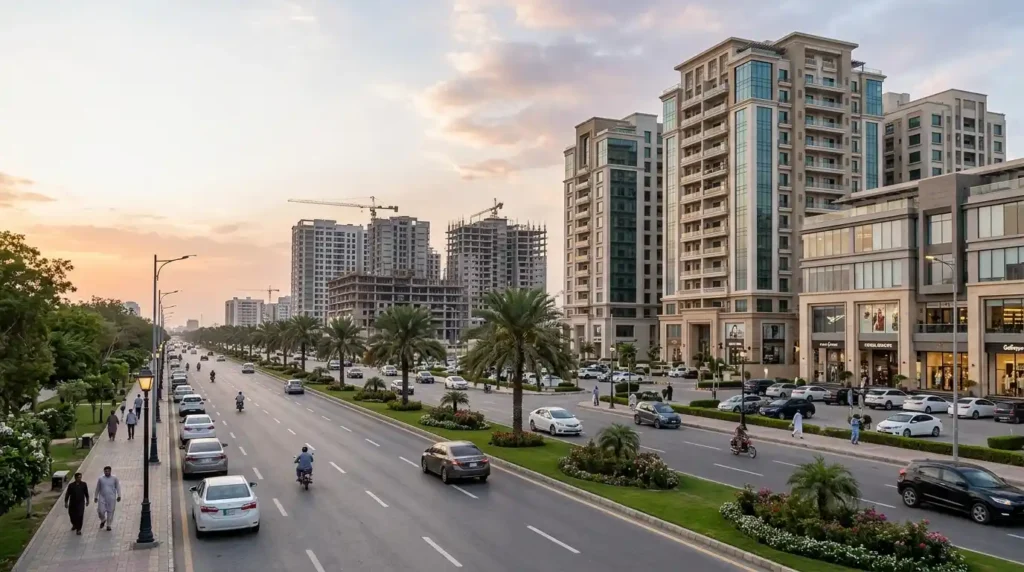
Location comes first for a reason. A well-positioned property benefits from what’s around it nearby homes, commercial areas, main roads, schools, and hospitals. Jinnah Avenue’s position gives it exactly this kind of surrounding ecosystem.
The rule is simple: the stronger the area around a property gets, the more useful and valuable that property becomes. Before buying, don’t just look at where the property sits today. Look at what’s growing up around it.
2. It’s Easy to Get To
People buy where it’s easy to live. That means quick access to work, schools, shops, and the rest of the city. Locations connected to major roads tend to get more attractive as the area around them fills in.
Good connectivity usually translates into:
- More buyer interest
- Stronger rental demand
- Easier access for tenants
- More commercial activity
- Better resale value later
Jinnah Avenue’s road connections are one of the stronger arguments in its favor.
3. Development Is Already Underway
Investors like catching an area between “emerging” and “established” buying before it’s fully built out usually means more room for prices to grow.
Watch for these signs of a location moving in that direction:
- New residential projects
- Retail outlets opening up
- Road and utility improvements
- Schools and clinics arriving
- Restaurants and cafés setting up
- New community facilities
If these are showing up around Jinnah Avenue, it’s a sign the area is turning into a more complete, livable place not just a plan on paper.
4. People Are Actually Moving In
A location only works long-term if people actually live there. Once families and professionals start moving in, demand for everyday services follows naturally groceries, pharmacies, clinics, schools, gyms, banks, restaurants.
That mix of residents and services is what builds a real property ecosystem. For investors, growing occupancy in an area usually opens doors on both the residential and commercial side.
5. Commercial Activity Has Room to Grow
More residents means more customers, and more customers means more reasons for businesses to move in. Jinnah Avenue could benefit from exactly this loop, assuming the land is approved for commercial use.
Possible commercial opportunities include:
- Retail shops and showrooms
- Restaurants and cafés
- Offices and service businesses
- Professional practices
One important caveat: always confirm the approved commercial use of a specific plot before buying. A growing population only helps if the property is legally set up to serve it.
6. The Infrastructure Actually Holds Up
Buyers today look past square footage. They check the real quality of the development construction standards, road quality, security, parking, electricity, water, waste management, elevators, and green spaces.
A well-built development is simply nicer to live and work in, which makes it more attractive to both end-users and investors. Before buying near Jinnah Avenue, go check the actual infrastructure yourself don’t rely on brochures alone.
7. Rental Income Is a Realistic Option
Capital growth isn’t the only reason to invest. Rent matters too. Properties near jobs, commercial areas, schools, and transport routes usually attract more tenants — families, professionals, small businesses, or corporate offices, depending on the property type.
Before buying purely for rental income, run the numbers with realistic market rents, and factor in maintenance, taxes, and periods where the property sits empty. Don’t rely on optimistic projections.
8. Lifestyle Amenities Add Real Value
Convenience sells. A location with retail, restaurants, parks, schools, healthcare, and fitness facilities nearby simply appeals to more people. That end-user demand is what keeps resale and rental markets healthy over the long run.
The easier it is to live somewhere, the more people want to live there and that’s ultimately what protects your investment.
9. Future Infrastructure Could Push Values Higher
Ask yourself: what will this area look like in five or ten years? New roads, better intersections, transport links, commercial expansion, schools, and hospitals can all move property values.
But be careful here there’s a big difference between an announced plan and something actually built. Don’t invest based on a promise alone. Look for real evidence: government approvals, visible construction progress, and confirmed development activity.
10. Getting In Early Has Its Own Advantage
Buying into an area before it fully matures usually means lower prices, more available inventory, and less competition than an already-established neighborhood. Emerging locations often come with more competitive pricing, newer construction, and flexible payment plans.
That said, early investing isn’t risk-free. Development can take longer than promised, plans can change, and market conditions shift. Early-mover investing should be backed by real research not just optimism.
What Should You Actually Look at With Jinnah Avenue?
Boil it down to seven questions:
- Location — Is it well-positioned within the wider city?
- Accessibility — Can people actually get there easily?
- Development — Is construction and infrastructure genuinely progressing?
- Demand — Are people actually choosing to live, work, or shop there?
- Amenities — Does it offer real day-to-day convenience?
- Rental potential — Could it attract tenants at realistic rents?
- Future growth — Are there credible, confirmed development plans?
When most of these line up, a location becomes genuinely worth investing in not just talking about.
Who Should Consider Jinnah Avenue?
First-time investors — good for evaluating newer projects with long-term growth potential, without the higher entry cost of an established area.
Long-term investors — better suited to riding out the gradual development curve rather than chasing short-term price jumps.
End-users — families and professionals who want a modern place to live can judge it on accessibility, amenities, and construction quality.
Commercial investors — should study population growth, foot traffic, business activity, and confirm what commercial uses are actually approved.
Before You Buy: A Real Due-Diligence Checklist
Don’t invest on location alone. Check these first.
Legal documents Ownership and title papers, approved building plans, authority approvals, NOCs where needed, land-use status, transfer process, outstanding dues, and property taxes.
The developer Their track record, past project delivery, construction quality, reputation, financial transparency, and after-sales support.
The full cost Not just the sticker price booking amount, installments, transfer charges, taxes, documentation, maintenance, service charges, renovation, and financing costs.
The market Compare nearby prices, current rental rates, ongoing development, similar projects, resale prices, and vacancy levels. This tells you whether you’re actually paying a fair price.
Is Jinnah Avenue a Smart Investment?
No property investment comes with a guarantee and Jinnah Avenue is no exception. But it does check several boxes investors usually look for: a strong position, good connectivity, active development, growing residential demand, commercial potential, decent infrastructure, and real future growth catalysts.
The better question isn’t “will prices definitely go up?” It’s:
“Does this property have strong enough fundamentals to support real demand over time?”
If your research, documentation, and pricing all back that up, Jinnah Avenue is worth a spot on your shortlist.
Conclusion
Good investing means spotting value before everyone else does. Jinnah Avenue deserves a closer look because of its location, connectivity, and growing relevance in the surrounding property market.
But picking a popular location isn’t the whole job. The real work is picking the right property, at the right price, with the right timeline in mind.
If Jinnah Avenue is on your list, compare your options, verify every document, understand the development timeline, and check both rental and resale potential before you commit. Smart investors don’t just buy property they buy potential backed by research.
Frequently Asked Questions
Is Jinnah Avenue a good place to invest in property?
It could be, thanks to its location, connectivity, ongoing development, and residential and commercial growth potential. Still, always evaluate the specific project and plot before committing.
Why does location matter so much for Jinnah Avenue?
Location drives accessibility, demand, rental income, commercial activity, and resale value. A well-positioned property tends to benefit as the surrounding area keeps developing.
Can property on Jinnah Avenue generate rental income?
Potentially, yes — but it depends on the specific property, its size, location, amenities, and current market rents. Always run a proper rental-yield calculation before buying.
Is Jinnah Avenue good for long-term investment?
It can be, especially if the surrounding infrastructure, population, and commercial activity keep strengthening. Long-term investors should still confirm development plans and weigh the risks.
What type of property should I buy there residential or commercial?
It depends on your goal. Residential suits end-users and rental investors. Approved commercial property suits those chasing business income or higher rental returns.
What should I check before buying on Jinnah Avenue?
Ownership documents, approvals, land-use status, developer track record, construction quality, payment terms, maintenance costs, market prices, rental demand, and resale potential.
Does commercial property here actually have potential?
Yes, where there’s enough population, footfall, accessibility, and real business demand. Always confirm the plot’s approved commercial use before buying.
Is it risky to invest in an emerging area like this?
Yes, to some degree. Emerging areas offer growth potential, but also come with development delays, shifting infrastructure timelines, and demand that can change. Go in with research, not assumptions.