
10 Costly Real Estate Investment Mistakes to Avoid in 2026
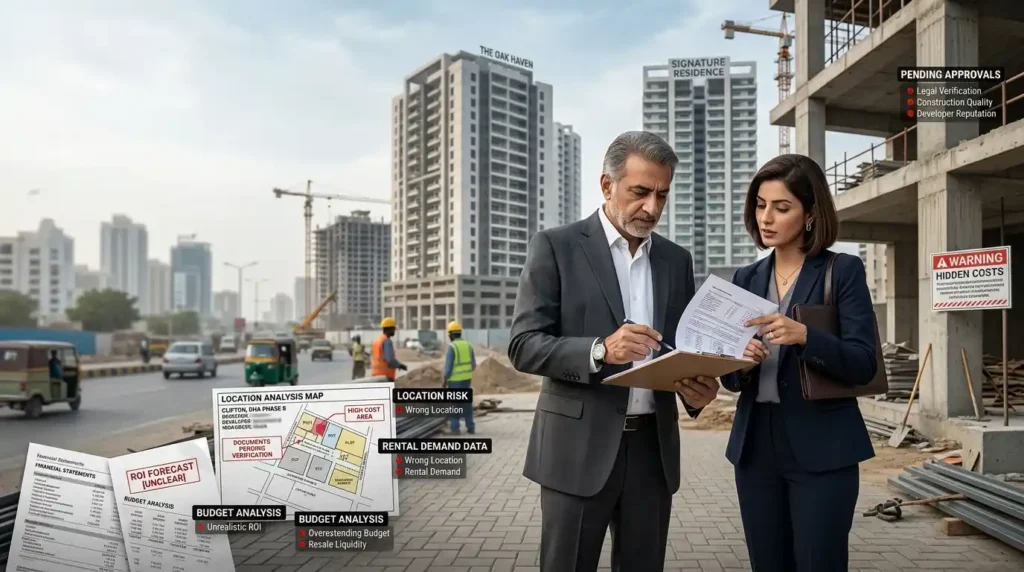
Introduction
Real estate is still one of the most trusted ways to build wealth in Pakistan. But here’s the part people forget: buying a property doesn’t automatically mean you’ve made a good investment.
A property that actually pays off takes homework real research, proper paperwork, honest financial planning, and a genuine understanding of the location and the market around it. A lot of investors skip most of that and fixate on one number: the price.
They buy because a plot looks cheap. Because an agent swears the area is “about to explode.” Because everyone in the family WhatsApp group is suddenly talking about the same housing scheme. And more often than you’d think, that kind of decision ends in delayed returns, surprise expenses, or a property that’s genuinely hard to sell when the time comes.
So what actually trips people up? Here are the mistakes that tend to cost investors the most and how to steer clear of them in 2026.
1. Skipping the Legal Checks
This is the big one. A property can look perfect and still be a legal minefield underneath.
Before you hand over serious money, check things like ownership records, the sale or allotment documents, whatever approvals apply, building permissions, any required NOCs, transfer history, outstanding dues, and whether there’s any dispute attached to the property.
And never, ever take someone’s word for it not the seller’s, not the agent’s, not a “trusted friend who knows the area.” Get it in writing and verified.
Why it matters: a property that’s cheap for a reason usually stops looking cheap the moment you discover the ownership isn’t clean. Verify first, pay later.
2. Picking a Location Just Because It’s Affordable
Cheap land pulls people in. But a low price tag, on its own, tells you almost nothing about whether the location is actually a good investment.
Before committing, look at road connectivity, nearby commercial hubs, schools, hospitals, public transport access, whether water and electricity are reliably available, how the population is trending, what infrastructure is planned, and whether there’s real rental demand in the area. An up-and-coming location can absolutely be worth it but you need to understand why it’s expected to grow, not just take it on faith.
The better question isn’t “where’s the cheapest property I can find?” It’s “where do price, demand, infrastructure, and future potential actually line up?”
3. Not Bothering to Check the Developer’s History
This one matters most when you’re buying into an under-construction project a flat, a plot in a new scheme, a unit that only exists on a brochure right now.
Brochures are designed to impress. A developer’s actual track record tells you a lot more. Look into their completed projects, how consistently they’ve delivered on time, the quality of past construction, what existing buyers say about them, whether their projects had proper approvals, their possession history, and how well they maintain what they’ve already built.
If you can, go visit a finished project and just talk to the people living there. Nothing beats hearing it straight from someone who already handed over their money and waited.
The pattern is simple: how a developer has delivered in the past is usually the best clue you’ll get about how they’ll deliver this time.
4. Fixating Only on the Sticker Price
The number in the ad is rarely the number you’ll actually pay.
Factor in transfer charges, registration costs, taxes, maintenance fees, utility connections, any renovation the place needs, parking charges, documentation costs, and financing costs if you’re borrowing. If you’re buying it as a rental, add in vacancy periods and ongoing upkeep too.
A cheaper property that needs a major renovation, or that ends up renting for far less than expected, can quietly turn out to be the more expensive option. Always work out the full cost of ownership before you compare prices.
5. Assuming Prices Only Go Up
“Property always appreciates” is one of the most repeated lines in Pakistani real estate and it’s not always true.
Over the long run, real estate can and often does grow in value. But individual properties, and individual locations, can sit flat or even lose demand for stretches of time. What actually drives performance includes the broader economy, interest rates, infrastructure development, oversupply in an area, local demand, how much construction is happening nearby, government policy, and the fundamental quality of the location itself.
Don’t buy on the assumption that the price graph only ever points up. It doesn’t work that way for every property, every time.
6. Overlooking Rental Demand
A lot of buyers get so focused on future appreciation that they forget to ask a much simpler question: does anyone actually want to live or work here right now?
Before buying something you plan to rent out, look at current rental rates in the area, how strong tenant demand actually is, typical vacancy periods, nearby job hubs, schools and universities, transport links, and what upkeep is going to cost you. A property that genuinely attracts tenants gives you income while you wait patiently or otherwise for the value to climb.
7. Overstretching Your Budget
It’s easy to get talked into installment plans that look manageable on paper but quietly eat into everything else household expenses, emergencies, your kids’ education, your business, financing costs, and whatever unexpected repairs the property throws at you.
A property investment should sit comfortably inside your financial life, not dominate it. Work out what you can realistically afford every month before you book anything and build your plan around what’s sustainable, not around the absolute maximum you could technically stretch to.
8. Falling for “Guaranteed Returns”
Any time someone promises guaranteed high returns on a property, treat that as a warning sign, not a selling point. Real estate returns move with the market no legitimate investment can promise otherwise.
Instead of getting excited by the projected number, ask how it was calculated. Is it based on real rental income, or a guess? What comparable properties actually support that valuation? What are the holding costs going to be? What’s a realistic exit price, and how long might it actually take to sell?
A grounded, honest projection is worth far more than an exciting one.
9. Not Thinking About Who’ll Buy It From You Later
At some point, you’ll probably want to sell. So it’s worth thinking about your eventual buyer before you’ve even become the owner.
Ask yourself plainly: who is realistically going to want to buy this from me? Properties with broad appeal the right size, a solid location, decent parking, good building condition, a reasonable floor, useful amenities, nearby facilities, and a price that holds up against similar listings tend to move faster.
A property can look great on paper and still be a headache to sell if nobody actually wants what you’re offering.
10. Letting Emotion Drive the Decision
Property is personal, there’s no getting around that. You might fall for the view, the layout, the neighbourhood vibe. But an investment decision needs more behind it than a feeling.
Before signing anything, weigh the price against the location, the legal status, the build quality, the rental demand, the future potential, and your exit strategy. If those numbers don’t add up, a beautiful apartment can still turn out to be a bad investment.
Bonus: Buying Because Everyone Else Is Buying
Hype is powerful. When it feels like every relative, friend, and Facebook group is talking about the same housing scheme, the fear of missing out kicks in fast.
But popularity and profitability aren’t the same thing. Before jumping on a trend, look at actual transaction prices in the area, how development is really progressing, genuine buyer demand, rental activity, infrastructure on the ground, and how much competing supply is already there.
Invest on evidence. Not on excitement.
A More Structured Way to Decide in 2026
Avoiding these mistakes really comes down to following a process instead of your gut.
Start with your goal. Are you buying for your own home, for rental income, purely for appreciation, for retirement, or as part of a longer wealth-building plan? Your goal should shape what type of property makes sense.
Set a real budget. Work out the down payment, monthly installments, taxes, transfer costs, maintenance, and a reserve for emergencies. Hidden costs have a way of showing up right when you least expect them.
Research the location properly. Connectivity, infrastructure, population trends, nearby facilities, rental demand, and what’s actually in the development pipeline. A location should have a real, explainable reason for future demand — not just a rumour.
Verify the property itself. Get proper legal and technical due diligence done. Marketing brochures are not due diligence.
Look into the developer. For anything new, check their delivery record on past projects, not just their current pitch.
Compare more than one option. Don’t commit to a major purchase after seeing a single property. Line up a few alternatives against the same criteria before deciding.
Work out your exit strategy up front. Ask yourself how this investment will actually make you money, and who’s likely to buy it from you down the line. That one question, asked early, tends to save people from a lot of regret later.
Buying Property in Karachi: A Few Things Worth Considering
If you’re looking specifically at Karachi, location-specific research matters even more, because different parts of the city genuinely serve different purposes.
Established areas usually come with stronger existing rental demand and infrastructure that’s already built out. Emerging areas can offer a lower entry price and room for future appreciation, but with more uncertainty attached. Which one makes sense really comes down to your timeline — someone wanting rental income now will probably lean toward an established residential area, while someone playing the long game might be comfortable with a developing corridor where infrastructure is still catching up.
Why Construction Quality Deserves More Attention
Location isn’t the only thing that determines what a property is worth. How it’s actually built plays a big role too it affects tenant demand, ongoing maintenance costs, how easily it resells, how long the building lasts, and how confident future buyers feel about it.
When you’re evaluating an apartment project, look past the brochure renders. Pay attention to the structure itself, the finishing, the plumbing and electrical systems, the elevators, the common areas, security arrangements, water systems, and how maintenance is actually organised. A property that’s genuinely well built tends to give owners a lot more peace of mind over the years than one that just looks good in the sales office.
Why a Trustworthy Developer Makes a Real Difference
Working with a reputable developer tends to make the whole process smoother clearer project information upfront, more structured payment plans, and construction that’s actually managed properly rather than left to chance.
If you’re considering a developer-led project, Al Rauf Group focuses on residential developments built around modern living, easy accessibility, and long-term value. That said, no developer’s reputation should replace your own due diligence do your homework regardless of who’s building it.
Final Thoughts
Real estate investing doesn’t need to be complicated. Most of the risk in it comes from mistakes that are entirely avoidable: skipping the paperwork, chasing the wrong location, trusting an unverified developer, believing unrealistic return promises, planning your finances poorly, or never thinking through how you’ll exit.
The investors who tend to do well aren’t just asking “how much can this property earn me?” They’re also asking “what could go wrong here, and how do I protect myself against it?”
Going into 2026, that second question matters more than ever. Research the location properly. Verify the property before you commit. Understand the real numbers, not just the pitch. Look into the developer’s actual history. And above all, invest according to your own financial goals not someone else’s sales pitch.
Frequently Asked Questions
1. What is the biggest real estate investment mistake to avoid in 2026?
One of the biggest mistakes is purchasing property without conducting proper legal, financial and market due diligence. Buyers should verify documentation, location, developer reputation, total costs and future demand before investing.
2. Is cheap property always a good investment?
No. A low purchase price does not guarantee good returns. Investors should also evaluate infrastructure, accessibility, rental demand, legal status, construction quality and resale potential.
3. Should I invest in an under-construction property?
An under-construction property can offer advantages such as installment plans and potential appreciation, but it also carries construction and delivery risks. Research the developer’s track record and verify the project’s documentation before investing.
4. How can I avoid property investment scams?
Verify ownership and project documentation, avoid making payments without proper agreements and receipts, research the developer or seller, and seek qualified legal advice when necessary.
5. What should I check before buying an investment property?
Check the property’s legal status, location, purchase price, rental demand, construction quality, maintenance costs, developer reputation and potential resale market.
6. Is rental income important when choosing an investment property?
It can be. Rental demand can provide recurring cash flow and help investors evaluate the practical demand for a property. However, expected rent should always be compared with the property’s total cost.
7. How much money should I invest in real estate?
There is no universal amount. Your investment should fit your income, savings, financial obligations, emergency reserves and risk tolerance. Avoid committing to payments that could create financial stress.
8. Is Karachi real estate still worth considering in 2026?
Karachi has a large and diverse property market, but investment performance varies significantly by location and property type. Investors should focus on areas with genuine end-user demand, infrastructure, legal clarity and realistic pricing rather than relying on general market assumptions.