10 Reasons Investors Are Buying Property in Scheme 33
Introduction
Buying a plot is one of the biggest financial decisions most people will ever make. While Scheme 33 has become one of Karachi’s fastest-growing residential corridors, not every plot offers the same investment potential.
Some buyers focus only on price, while others are attracted by attractive marketing campaigns. Unfortunately, making a decision without proper research can lead to legal complications, unexpected costs, or limited future returns.
Whether you’re purchasing land to build your dream home or investing for future appreciation, asking the right questions before making a commitment is essential.
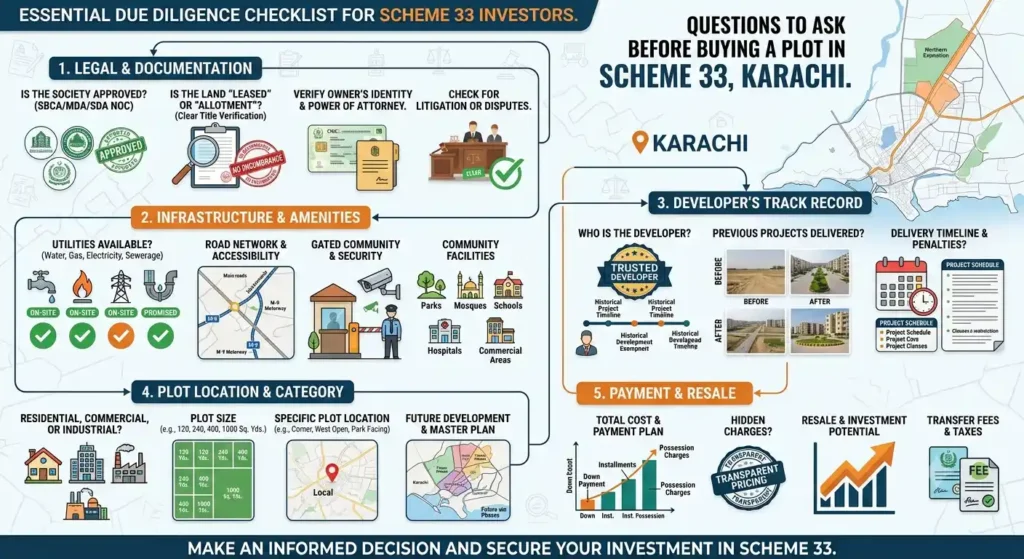
This guide highlights the most important questions every buyer should ask before purchasing a plot in Scheme 33, helping you make a secure and informed investment.
Why Due Diligence Matters
Real estate investment is about more than simply finding an affordable plot.
A successful purchase requires evaluating:
- Legal documentation
- Developer credibility
- Infrastructure
- Accessibility
- Future growth
- Investment potential
Spending extra time researching today can save significant money and stress in the future.
1. Is the Plot Legally Approved?
This should always be your first question.
Before paying any booking amount or signing documents, confirm that the project has the necessary legal approvals from the relevant authorities.
Ask for:
- Approved layout plan
- Ownership documents
- Development permissions
- NOCs (where applicable)
Buying legally verified property reduces the risk of future disputes and protects your investment.
2. Who Is the Developer?
The developer’s reputation can significantly influence your investment.
Research their:
- Previous projects
- Delivery record
- Construction quality
- Customer reviews
- Market reputation
A developer with a successful history is generally more likely to complete projects on time and maintain quality standards.
Choosing the right developer often matters just as much as choosing the right location.
3. What Is the Exact Location of the Plot?
Not all plots within Scheme 33 have the same investment potential.
Consider:
- Distance from main roads
- Nearby schools
- Hospitals
- Commercial centers
- Public transportation
- Future infrastructure projects
Even within the same neighborhood, location can greatly influence future resale value.
4. Is the Area Fully Developed or Still Growing?
Some sectors of Scheme 33 are already well established, while others remain under development.
Ask questions such as:
- Are roads completed?
- Are utility connections available?
- Are families already living nearby?
- Is commercial activity increasing?
Plots located in developing areas often provide stronger appreciation potential, while developed sectors may offer faster construction opportunities.
5. What Utilities Are Available?
Before purchasing any plot, verify the availability of essential services.
These include:
- Electricity
- Water supply
- Sewerage system
- Gas connection (where available)
- Internet services
Access to reliable utilities significantly improves both livability and property value.
6. What Are the Total Costs Beyond the Plot Price?
Many buyers focus only on the advertised plot price.
However, additional expenses may include:
- Documentation charges
- Transfer fees
- Development charges
- Utility connection fees
- Government taxes
- Registration costs
Request a complete cost breakdown before making your decision.
Knowing the total investment helps avoid unexpected financial surprises later.
7. Does the Plot Have Good Future Appreciation Potential?
One of the biggest reasons investors choose Scheme 33 is its long-term growth potential.
Evaluate whether the surrounding area shows signs of continued development, such as:
- New residential projects
- Commercial developments
- Road improvements
- Educational institutions
- Healthcare facilities
- Shopping centers
Infrastructure growth often drives future property appreciation.
Investing in locations with strong development prospects can significantly improve long-term returns.
8. What Is the Size of the Plot and Does It Match Your Future Needs?
Choosing the right plot size is just as important as choosing the right location.
Before purchasing, ask yourself:
- Will this plot accommodate my future home?
- Do I plan to build immediately or later?
- Is the size suitable for resale?
- Will it meet my family’s future requirements?
Buying a plot that aligns with your long-term plans can save you from costly upgrades or relocation in the future.
9. Are There Any Development Charges Remaining?
Many buyers assume that the quoted plot price includes every expense.
However, some projects may have outstanding development charges that become payable later.
Ask the seller or developer:
- Have all development charges been paid?
- Will additional infrastructure fees apply?
- Are there any pending maintenance or society charges?
Obtaining written confirmation helps avoid unexpected financial obligations after purchase.
10. What Is the Possession Timeline?
If you’re buying a plot for construction, knowing when possession will be available is essential.
Ask questions such as:
- Is the plot ready for possession?
- Can construction begin immediately?
- Are roads and utilities already operational?
- Is possession subject to future development?
Understanding the timeline helps you plan your finances and construction schedule more effectively.
11. What Is the Current Market Demand?
A good investment isn’t determined only by today’s price—it also depends on future buyer demand.
Research whether the surrounding area is attracting:
- Families
- Investors
- Commercial activity
- New housing developments
- Infrastructure projects
Strong demand often supports higher resale values and improved investment returns.
12. What Are Similar Plots Selling For?
Before finalizing your purchase, compare prices with similar plots in nearby sectors.
Review:
- Plot size
- Road-facing location
- Corner or standard plot
- Development status
- Society reputation
Comparing multiple properties helps you determine whether you’re paying a fair market price.
Never rely on a single quotation before making an investment decision.
13. Are There Any Restrictions on Construction?
Different housing societies may have different construction regulations.
Ask about:
- Building height limits
- Covered area requirements
- Architectural guidelines
- Approval procedures
- Construction timelines
Knowing these regulations before buying helps prevent delays and unexpected compliance issues later.
14. What Is the Long-Term Investment Potential?
Real estate is generally a long-term investment.
Before purchasing a plot, evaluate factors that influence future appreciation, including:
- Planned road expansions
- New residential projects
- Commercial developments
- Educational institutions
- Healthcare facilities
- Population growth
Areas experiencing continuous development often offer stronger long-term investment potential.
15. Have You Verified Every Document Independently?
Never rely solely on verbal assurances.
Always have property documents reviewed by qualified legal professionals or trusted real estate advisors before completing the transaction.
Independent verification provides additional confidence and helps protect your investment.
A careful review today can prevent costly legal issues tomorrow.
Common Mistakes Buyers Should Avoid
Even experienced investors sometimes make avoidable mistakes.
Here are some of the most common ones:
Buying Solely Based on Price
The cheapest plot isn’t always the best investment.
Consider location, infrastructure, and future demand alongside price.
Ignoring Legal Verification
Incomplete documentation can lead to disputes, transfer delays, or financial loss.
Always verify ownership and approvals before making payment.
Choosing an Unknown Developer
A reputable developer often provides greater transparency, quality, and confidence throughout the buying process.
Not Visiting the Site
Marketing materials can never replace an actual site visit.
Inspect the location, surrounding development, road access, and neighborhood before making your decision.
Failing to Plan for Future Costs
Budget for registration, taxes, utility connections, development charges, and construction expenses—not just the purchase price.
Verified vs Unverified Plot: A Quick Comparison
| Factor | Verified Plot | Unverified Plot |
|---|---|---|
| Legal Documentation | Complete | May be incomplete |
| Ownership Clarity | Clear | Possible disputes |
| Investment Risk | Lower | Higher |
| Financing & Transfer | Easier | May face complications |
| Buyer Confidence | High | Limited |
| Future Resale | Stronger | Can be difficult |
Choosing a legally verified property provides greater security and peace of mind for both homeowners and investors.
Why Al Rauf Group Focuses on Transparency
At Al Rauf Group, we recognize the tremendous potential that Scheme 33 offers to today’s homebuyers and investors.
Our vision is to create residential communities that combine quality construction, modern architecture, strategic locations, and long-term investment value.
Our developments are designed around the needs of modern families while offering investors confidence in their property decisions.
Our portfolio includes:
- Al Rauf Smart City
- Al Rauf North Vista I & II
- Al Rauf Gold Raas
- Al Rauf Gold Residency
- China Town Residency
Every project reflects our commitment to delivering homes that provide comfort, convenience, and lasting value.
Whether you’re purchasing your first apartment or expanding your investment portfolio, Al Rauf Group is dedicated to helping you make informed real estate decisions.
Final Thoughts
Buying a plot in Scheme 33 can be an excellent long-term investment—but only if you ask the right questions before making a commitment.
From legal verification and developer reputation to infrastructure, utilities, and future appreciation, every factor plays an important role in determining the success of your investment.
Rather than rushing into a purchase, take the time to research, compare options, and verify documentation thoroughly.
The most successful investors don’t simply buy property—they buy the right property.
By asking these essential questions and working with reputable developers, you’ll be in a much stronger position to make a confident investment that delivers value for years to come.
Frequently Asked Questions
1. What questions should I ask before buying a plot in Scheme 33?
Before buying a plot in Scheme 33, you should ask about the property’s legal status, ownership documents, developer reputation, exact location, availability of utilities, development charges, possession timeline, and future appreciation potential. Asking these questions helps you make a secure and informed investment.
2. How can I verify if a plot in Scheme 33 is legally approved?
You can verify a plot by checking the ownership documents, approved layout plans, and relevant approvals from the concerned authorities. It’s also advisable to have all documents reviewed by a qualified legal advisor before completing the purchase.
3. Is Scheme 33 a good location for long-term property investment?
Yes. Scheme 33 is considered one of Karachi’s fastest-growing residential corridors due to its expanding infrastructure, modern housing developments, increasing population, and strong demand for residential properties. These factors contribute to its long-term investment potential.
4. Why is the developer's reputation important when buying a plot?
A reputable developer is more likely to deliver quality projects, maintain transparent documentation, and complete developments on time. Researching the developer’s previous projects and market reputation can significantly reduce investment risk.
5. What common mistakes should buyers avoid when purchasing a plot in Scheme 33?
Buyers should avoid purchasing without verifying legal documents, choosing a property based only on price, ignoring the developer’s reputation, skipping a site visit, and failing to understand the total investment cost, including taxes, development charges, and registration fees.