Where Is Jinnah Avenue? Why Is It Famous and What Does the Future Hold?
Introduction
Jinnah Avenue is becoming a popular name among people looking for apartments and new residential projects in Karachi. Many buyers are now asking where it is located, why it is attracting attention and whether it is a good place to buy property.
Before choosing an apartment, it is important to understand the area first. Buyers should look at the location, road access, nearby facilities, development work and the expected demand in the future.
This guide explains what you should know about Jinnah Avenue, the reasons behind its growing popularity and the key points to check before buying property there.
Where Is Jinnah Avenue Located?
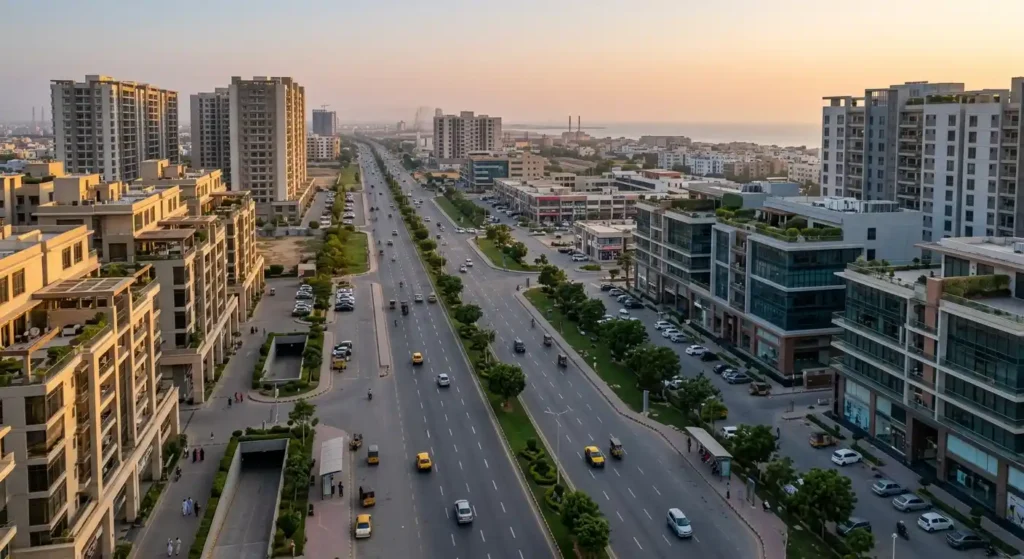
Jinnah Avenue is a developing road and residential corridor in Karachi. It is becoming known because of its connection with nearby residential and commercial areas and the new property projects being developed around it.
However, buyers should not judge a property only because it is advertised as being “near Jinnah Avenue.” The exact location makes a major difference.
Before considering any project, check:
Distance from main roads.
Access to public transport.
Nearby residential communities.
Schools and colleges.
Hospitals, clinics and pharmacies.
Markets and shopping areas.
Restaurants and grocery stores.
Road conditions.
Traffic during busy hours.
Water, electricity, gas and internet.
Future development around the project.
Two properties may both be marketed as being close to Jinnah Avenue, but their surroundings and daily convenience can be completely different.
A location is more than a map pin
A property may look attractive on Google Maps, but that does not always mean it will be convenient for everyday life.
Ask yourself:
How long will it take to reach work?
How far is the nearest school?
Where will you buy groceries?
Is a hospital easily accessible?
Is the road usable during the rainy season?
Will traffic make daily travel difficult?
Visit the location personally before making a decision. Property advertisements usually show the best side of a project, but an on-site visit gives you a clearer picture.
Why Is Jinnah Avenue Becoming Famous?
Jinnah Avenue is attracting attention because of the residential and real estate development taking place in and around the area.
As Karachi continues to expand, many buyers are looking for newer locations that offer:
Modern apartments.
Better layouts.
Parking facilities.
Security.
New infrastructure.
Family-friendly surroundings.
Access to major roads.
Different apartment sizes.
Long-term residential potential.
New developments can be attractive for buyers who want a modern apartment but cannot afford property in some of Karachi’s most expensive established areas.
Projects offering 2-bed, 3-bed and 4-bed apartments can also attract different types of buyers, including couples, small families, large families and investors.
How Did Jinnah Avenue Get Its Name?
The name Jinnah Avenue refers to Quaid-e-Azam Muhammad Ali Jinnah, the founder of Pakistan.
Many roads, buildings, institutions and public places across the country have been named after him to honour his role in Pakistan’s history.
However, the name of a road does not determine its property value. For buyers, more practical questions are important:
How easy is it to reach the area?
What infrastructure is available?
Are utilities reliable?
Are schools and hospitals nearby?
Is development taking place around the project?
Is there genuine demand from buyers and tenants?
These factors have a much greater impact on living quality and property performance.
Why Are Buyers Interested in Jinnah Avenue?
Most property buyers want a location that offers both present-day convenience and future potential. Jinnah Avenue is gaining attention because it is linked with newer residential projects and Karachi’s expanding urban development.
1. Better accessibility
A property connected to important roads can make daily travel easier. However, do not judge accessibility only by distance. Traffic, road quality and transport options also matter.
2. New apartment projects
New buildings may offer facilities that are not available in older properties, such as:
Modern layouts.
Elevators.
Covered parking.
Security systems.
Backup power.
Better common areas.
New plumbing and electrical systems.
3. Different apartment sizes
Projects with different apartment layouts can meet the needs of more buyers.
A 2-bed apartment may suit a small family, while a 3-bed or 4-bed apartment may be more suitable for a larger household.
4. Nearby development
New shops, schools, roads, restaurants and other facilities can make an area more convenient over time.
5. Possible future demand
If more people begin living and working nearby, demand for homes and rental properties may grow.
Still, future demand is only a possibility. It should not be treated as a guarantee that property prices will increase.
Is Jinnah Avenue a Good Place to Live?
Jinnah Avenue may be suitable for some buyers, but the answer depends on the specific project and your daily routine.
Before buying, check whether the area gives you convenient access to:
Schools.
Offices and workplaces.
Hospitals and clinics.
Grocery stores.
Restaurants.
Banks and ATMs.
Mosques.
Parks.
Public transport.
Major roads.
A location that works well for one family may not work for another. For example, a project may be a good choice for someone working nearby but inconvenient for a person travelling to DHA, Clifton or another distant part of Karachi every day.
Visit the location at least twice
Try to visit the area at different times:
Morning: To understand school and office traffic.
Evening: To check traffic, activity, parking and security.
Weekend: To see how busy the area is when families are at home.
These visits can reveal problems that may not be obvious during a sales presentation.
What Types of Apartments Are Available?
The available apartment types depend on the individual project. However, residential developments around emerging corridors commonly offer different layouts for different family sizes.
2-bed apartments
A 2-bed apartment may suit:
Couples.
Small families.
First-time buyers.
Professionals.
Rental investors.
Buyers with a limited budget.
These apartments are often easier to rent because they can appeal to a wider group of tenants.
3-bed apartments
A 3-bed apartment may be suitable for:
Growing families.
Families with children.
Buyers moving from a smaller apartment.
People who need a study or guest room.
Families looking for more living space.
4-bed apartments
A 4-bed apartment may suit:
Large families.
Multi-generational households.
Buyers who prefer spacious living.
Families needing extra bedrooms.
People looking for larger living and dining areas.
A bigger apartment is not always the better choice. Compare the full picture:
Price + location + layout + maintenance + rental demand + resale potential
A well-designed 2-bed apartment in a convenient location may be more practical than a poorly planned 4-bed apartment in a difficult-to-reach area.
Is Jinnah Avenue Suitable for Families?
Families should look beyond the apartment itself. The surrounding area plays an equally important role in daily life.
Schools
Check the distance to nearby schools and calculate the travel time during busy hours. A school that looks close on a map may take much longer to reach during traffic.
Healthcare
Look for hospitals, clinics, pharmacies and emergency services nearby.
Shopping
Check whether supermarkets, grocery stores, bakeries and other daily-use shops are easily accessible.
Parks and recreation
Families with children should consider nearby parks, walking areas and recreational facilities.
Security
Ask residents and building management about security. Do not depend only on the claims made in advertisements.
Parking
Parking can become a serious problem in apartment buildings. Confirm whether parking is:
Dedicated or shared.
Covered or open.
Included in the apartment price.
Sold separately.
Available for visitors.
Sufficient for the number of residents.
What Could the Future of Jinnah Avenue Look Like?
The future of Jinnah Avenue will depend on how the surrounding area develops. Buyers should keep an eye on:
Road improvement.
Public transport.
New residential projects.
Commercial markets.
Schools and colleges.
Hospitals and clinics.
Shopping and retail areas.
Water and electricity supply.
Sewerage and drainage.
Population growth.
Nearby employment opportunities.
A residential area becomes more useful when homes, roads, shops, schools, healthcare and transport develop together.
However, buyers should remain realistic. Future development does not guarantee future property appreciation. Prices are also affected by:
Economic conditions.
Interest and financing costs.
Construction activity.
Supply and demand.
Government policies.
Inflation.
Overall Karachi property trends.
The safest approach is to buy a property that makes sense today. Treat future development as an added possibility, not as a guaranteed return.
Could Jinnah Avenue Become a Major Residential Area?
A successful residential location needs more than apartment buildings. It needs a complete community.
That includes:
Homes + Roads + Utilities + Schools + Healthcare + Shops + Transport + Employment
When these facilities develop together, residents do not need to travel long distances for basic needs. This can improve the area’s appeal to both homeowners and tenants.
For this reason, buyers should monitor more than just the number of new projects. Look at the quality of roads, utility connections, commercial activity and public facilities around each project.
What to Check Before Buying Property
1. Verify the documents
Ask for and verify:
Ownership documents.
Project approvals.
Relevant NOCs.
Building plans.
Allotment or sale documents.
Transfer process.
Possession terms.
Do not rely only on a brochure or verbal promises from a sales representative.
2. Research the developer
Check the developer’s:
Completed projects.
Construction quality.
Delivery record.
Possession history.
Customer reviews.
Maintenance after handover.
Reputation for handling complaints.
A developer’s previous work can tell you more than attractive marketing.
3. Inspect construction quality
If the building is completed or under construction, inspect:
Structure.
Flooring.
Doors and windows.
Plumbing.
Electrical wiring.
Elevators.
Fire-safety systems.
Water tanks and pumps.
Parking.
Common areas.
4. Understand the complete payment plan
Do not look only at the advertised monthly installment. Calculate the total cost, including:
Booking amount.
Down payment.
Monthly installments.
Development charges.
Parking charges.
Utility connection charges.
Transfer fees.
Taxes and government charges.
Maintenance fees.
Any additional costs.
A low installment can still lead to a high total price.
5. Check rental and resale demand
Even if you are buying for your own use, your circumstances may change in the future.
Ask:
Who would rent or buy this property from me later?
If the answer is unclear, investigate the area’s rental demand and resale activity before investing.
Jinnah Avenue Compared with Established Areas
Some buyers compare Jinnah Avenue with established areas such as:
DHA.
Clifton.
Gulshan-e-Iqbal.
North Nazimabad.
PECHS.
Gulistan-e-Johar.
These areas offer different lifestyles and price ranges. The comparison should not be based only on which location is more famous.
Instead, compare:
Purchase price.
Apartment size.
Travel time.
Building quality.
Utility reliability.
Nearby facilities.
Maintenance.
Rental demand.
Resale potential.
A newer apartment in a developing area may offer better space, while an older apartment in an established area may provide stronger access to schools, offices and markets.
Why Developer Reputation Matters
The location is only one part of buying an apartment. The developer also matters, especially when purchasing an under-construction property.
Look for evidence of:
Completed projects.
Good construction standards.
Timely delivery.
Clear documentation.
Transparent payment plans.
Customer support.
Proper maintenance after possession.
If you are considering a project by Al Rauf Group, review the specific project’s location, approvals, construction progress, apartment layout, payment plan, facilities and maintenance arrangements.
The same rule applies to every developer:
Do not buy only on promises. Check the track record.
Is Jinnah Avenue Good for Investment?
Jinnah Avenue may be worth considering for investment, but there is no guaranteed answer.
Before investing, study:
Purchase price.
Rental demand.
Location.
Development potential.
Construction quality.
Legal status.
Maintenance costs.
Resale demand.
Expected holding period.
A property may be in a promising location but still be a poor investment if it is overpriced. Similarly, an affordable apartment may not perform well if very few people want to rent or buy there.
The individual property is just as important as the area.
7 Questions to Ask Before Buying
Before paying a booking amount, ask:
Is the project legally approved?
Who owns the land?
What approvals and NOCs are required?
When will possession be given?
What is included in the advertised price?
What additional and maintenance charges will apply?
What projects has the developer successfully completed?
Always request important answers in writing.
Who Should Consider Living on Jinnah Avenue?
Jinnah Avenue may suit buyers who want:
A newer residential project.
Apartment living.
Modern building facilities.
Different apartment sizes.
Access to important parts of Karachi.
A developing residential environment.
A long-term home rather than a quick speculative investment.
It may be less suitable for people who need to travel daily to a distant part of Karachi. For such buyers, commute time should be one of the first things to calculate.
Final Thoughts
Jinnah Avenue is attracting attention because of new residential development and Karachi’s continued urban expansion.
But the road name alone should not decide your purchase. A good property needs more than a well-known address. It should offer:
Convenient access.
Reliable utilities.
Clear legal documents.
Good construction.
A practical apartment layout.
Reasonable maintenance costs.
Genuine residential demand.
Sensible pricing.
If you are researching Jinnah Avenue, visit the location, compare different projects, verify the documents and calculate the complete cost.
Do not buy simply because someone promises that prices will rise. Buy when the property works for your lifestyle, budget and long-term plans.
Frequently Asked Questions
Where is Jinnah Avenue located?
Jinnah Avenue is a developing and increasingly recognised real estate corridor in Karachi. Its exact surroundings and accessibility depend on the specific section and project, so buyers should verify the complete address instead of relying only on the name.
What is Jinnah Avenue famous for?
Jinnah Avenue is becoming known for residential and real estate development, particularly newer apartment projects and growing buyer interest.
How did Jinnah Avenue get its name?
The name refers to Quaid-e-Azam Muhammad Ali Jinnah, the founder of Pakistan.
Is Jinnah Avenue a good place to buy property?
It may be suitable for buyers interested in newer residential projects. However, check the exact location, legal status, construction quality, price and developer record before purchasing.
What types of apartments are available near Jinnah Avenue?
Depending on the project, buyers may find 2-bed, 3-bed and 4-bed apartments, along with other family-sized layouts.
Is Jinnah Avenue good for families?
It can be suitable for families if the project has convenient access to schools, hospitals, markets, parks, security, parking and reliable utilities.
What is the future of Jinnah Avenue?
Its future will depend on roads, transport, utilities, commercial development, residential demand and public facilities. Continued development may improve the area, but price growth should never be considered guaranteed.
Should I buy an apartment on Jinnah Avenue for investment?
You may consider it after checking the purchase price, rental demand, developer reputation, documentation, maintenance costs and resale potential.
What should I check before buying property on Jinnah Avenue?
Verify the project’s approvals, ownership documents, construction quality, possession terms, payment plan, parking, utilities, maintenance charges and the developer’s previous projects.